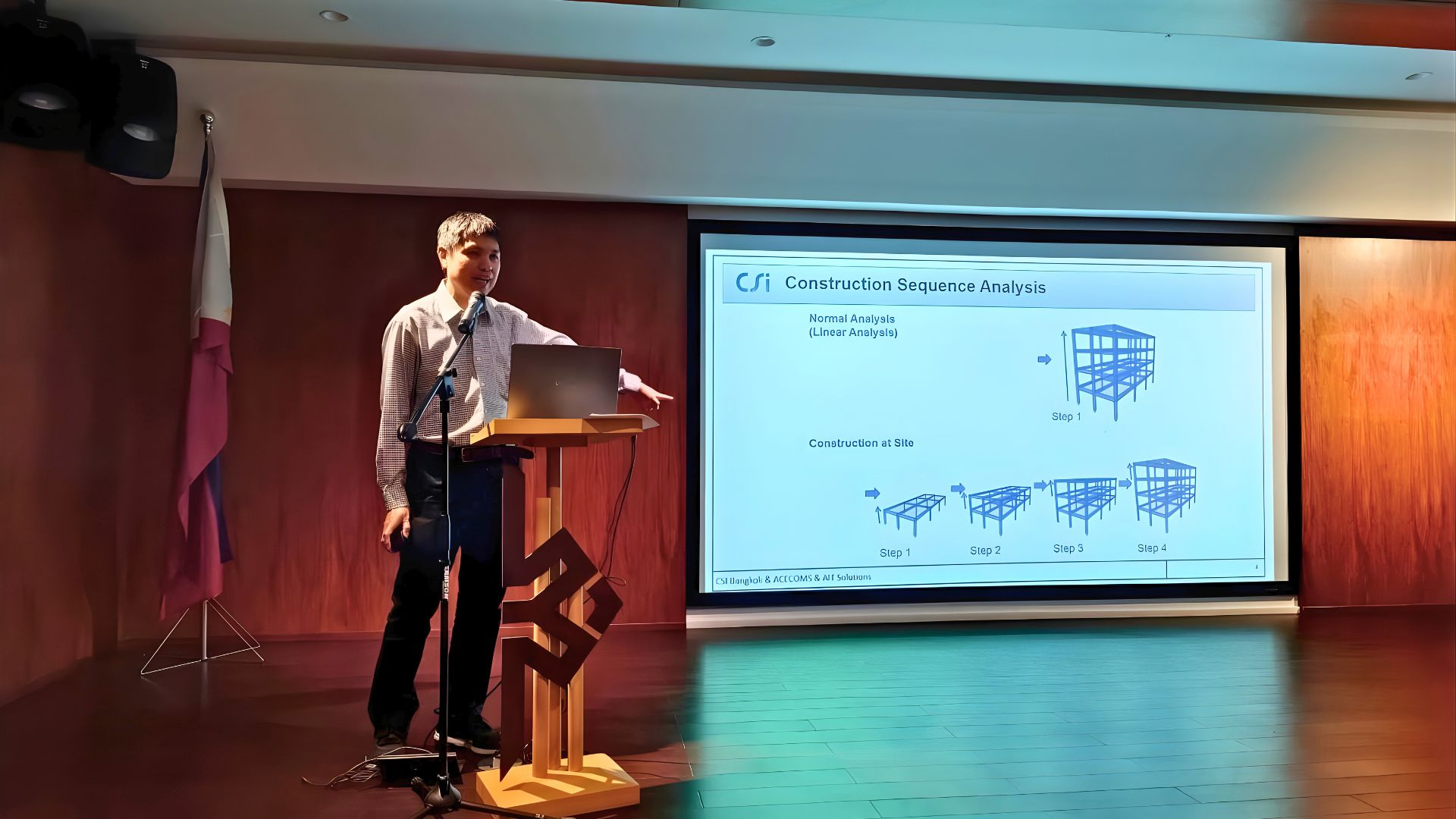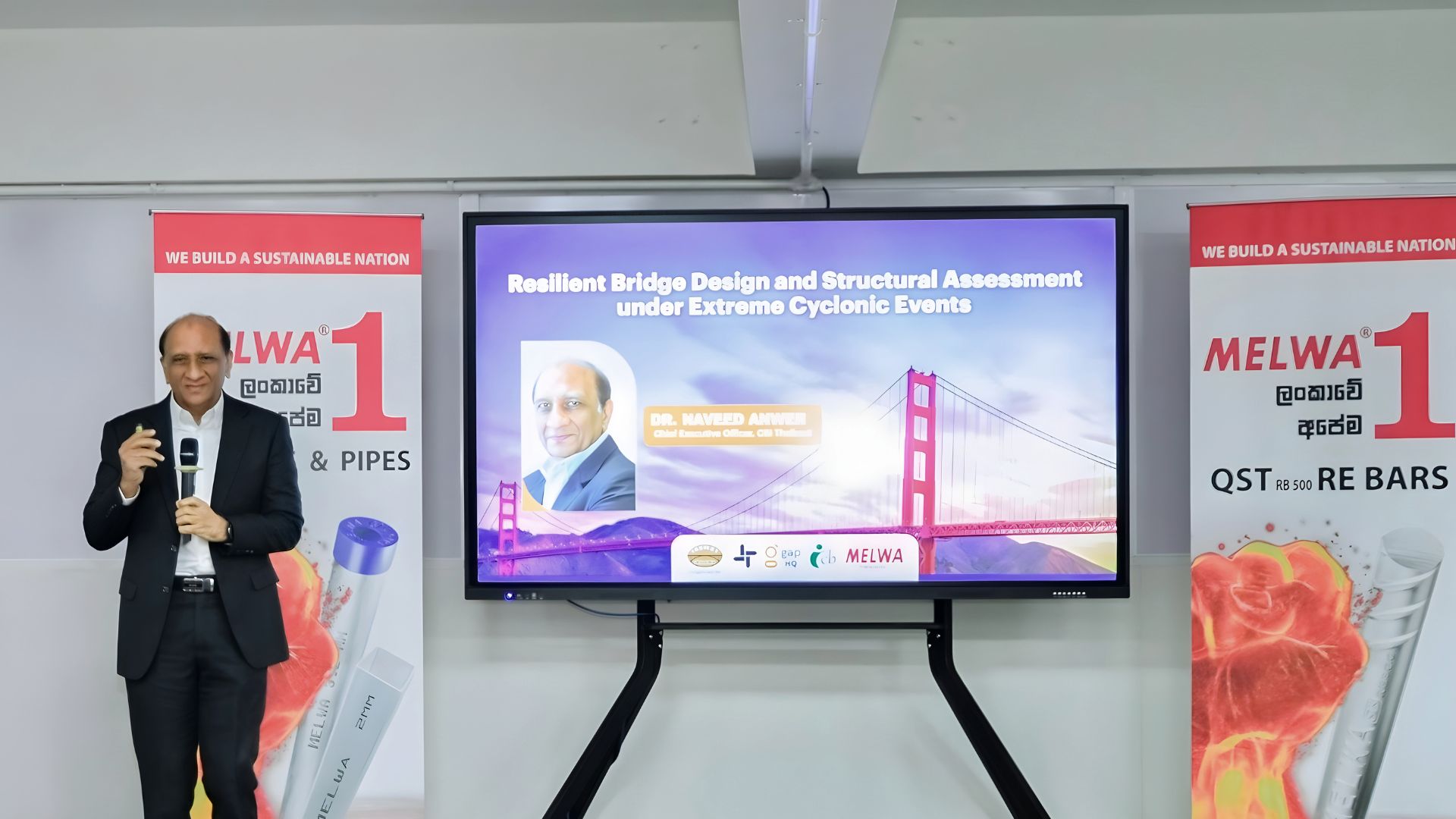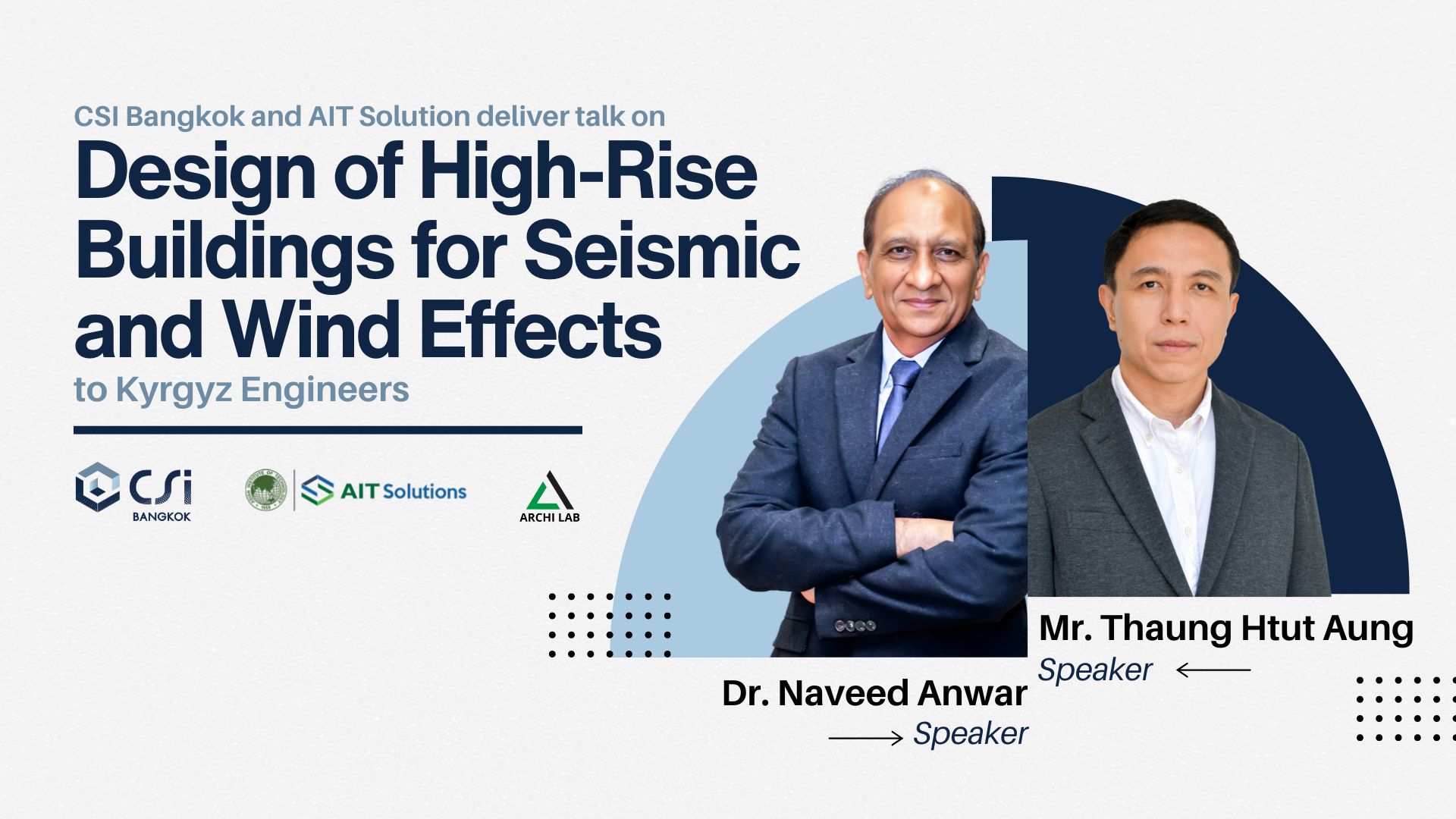
A webinar on design of high-rise buildings for seismic and wind effects was conducted on 9th December 2025 by Archi-Lab LLC, the authorized CSi partner in Kyrgyzstan, Kazakhstan, and Uzbekistan.
In a collaboration between CSI Bangkok, AIT Solutions and Archi-Lab, the session brought together regional expertise and offered participants practical approaches to design of high-rise buildings for seismic and wind effects using ETABS/SAP2000 software solutions.
Dr. Naveed Anwar, CEO of CSI Bangkok and Mr. Mr. Thaung Htut Aung, Executive Director at AIT Solutions both delivered impactful and valuable presentations on the subject.
Understanding Building Behavior to Lateral Forces
The webinar examined how tall buildings respond to lateral forces from wind and earthquakes. Key topics included understanding natural building vibrations, different design approaches from traditional to performance-based methods, and how various structural systems work at different building heights.
Dr. Naveed Anwar’s Session
Dr. Naveed Anwar covered the fundamentals of structural analysis and their practical application. His presentation traced the evolution from foundational principles to contemporary computational methods.
Dr. Naveed discussed how modern tall buildings face unique challenges when subjected to these forces, and how different systems—from braced frames to outrigger structures—address these demands.
Key areas included:
- Using modal analysis to understand building behavior
- Various seismic analysis methods
- How tall buildings respond to dynamic loads
- Structural systems for different building heights
- Integration of specialized structural elements
Dr. Naveed emphasized understanding modal response as the “pulse of the structure,” helping engineers identify potential issues with building behavior early in the design process.
Mr. Thaung Htut Aung on Influence of Plan Irregularity
Mr. Thaung Htut Aung examined structural irregularities and their design implications.
Mr. Thaung Htut Aung provided practical guidance on identifying and addressing irregularities in accordance with design codes, including implications for analysis methods and performance requirements.
His presentation covered:
- Horizontal irregularities including torsional effects, reentrant corners, and discontinuities
- Vertical irregularities such as soft stories and geometric changes
- Design procedures and load considerations
- Wind analysis parameters
Balancing Design Requirements
Both speakers highlighted how design decisions in tall buildings are interconnected. Optimizing one requirement may create challenges for others, requiring engineers to balance demands from gravity, wind, and seismic loads. Irregularities in plans or elevation can significantly affect building response and require more detailed analysis.
Cross-region Collaboration
The collaboration between Archi-Lab LLC and CSI Bangkok is part of an ongoing vision to advance structural engineering knowledge. By connecting engineers from different regions, the partnership helps spread effective design methods and encourages continuous professional growth.
Event Details
Title: Design of High-Rise Buildings for Seismic and Wind Effects in ETABS/SAP2000: Influence of Plan Irregularity and Vertical Irregularity
Organizers:
Archi-Lab LLC (CSi Partner: Kyrgyzstan, Kazakhstan, Uzbekistan)
CSI Bangkok
Speakers:
Dr. Naveed Anwar, CEO, CSI Bangkok
Mr. Thaung Htut Aung, Executive Director, AIT Solutions, Asian Institute of Technology
Language: Bilingual (English and Russian)
Software Focus: ETABS and SAP2000
Recording: [Link to be added]
For more information about structural engineering services and software training, please visit csibangkok.com or contact AIT Solutions at [email protected] for software sales.