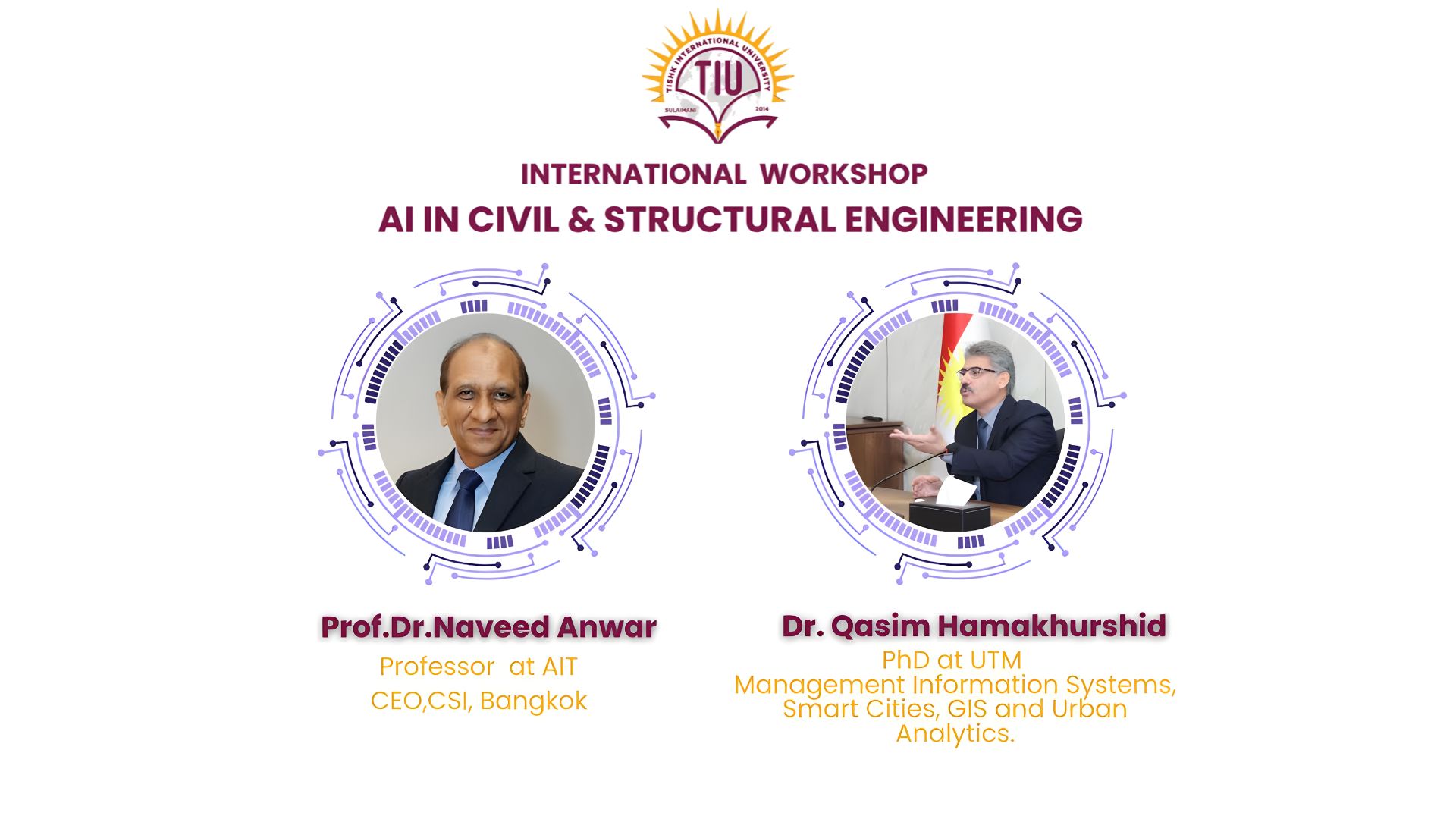
Dr. Naveed & Dr. Qasim speak at International Workshop on AI in Civil and Structural Engineering held at Tishk International University – Sulaimani
The Civil Engineering Department at Tishk International University Sulaimani recently hosted an International Workshop, which aimed to bridge academic and industry perspectives on the evolving role of artificial intelligence in engineering practice and education.
This hybrid one-day workshop was held on Tuesday, December 16, 2025, at the conference hall on the second floor of Tishk International University.
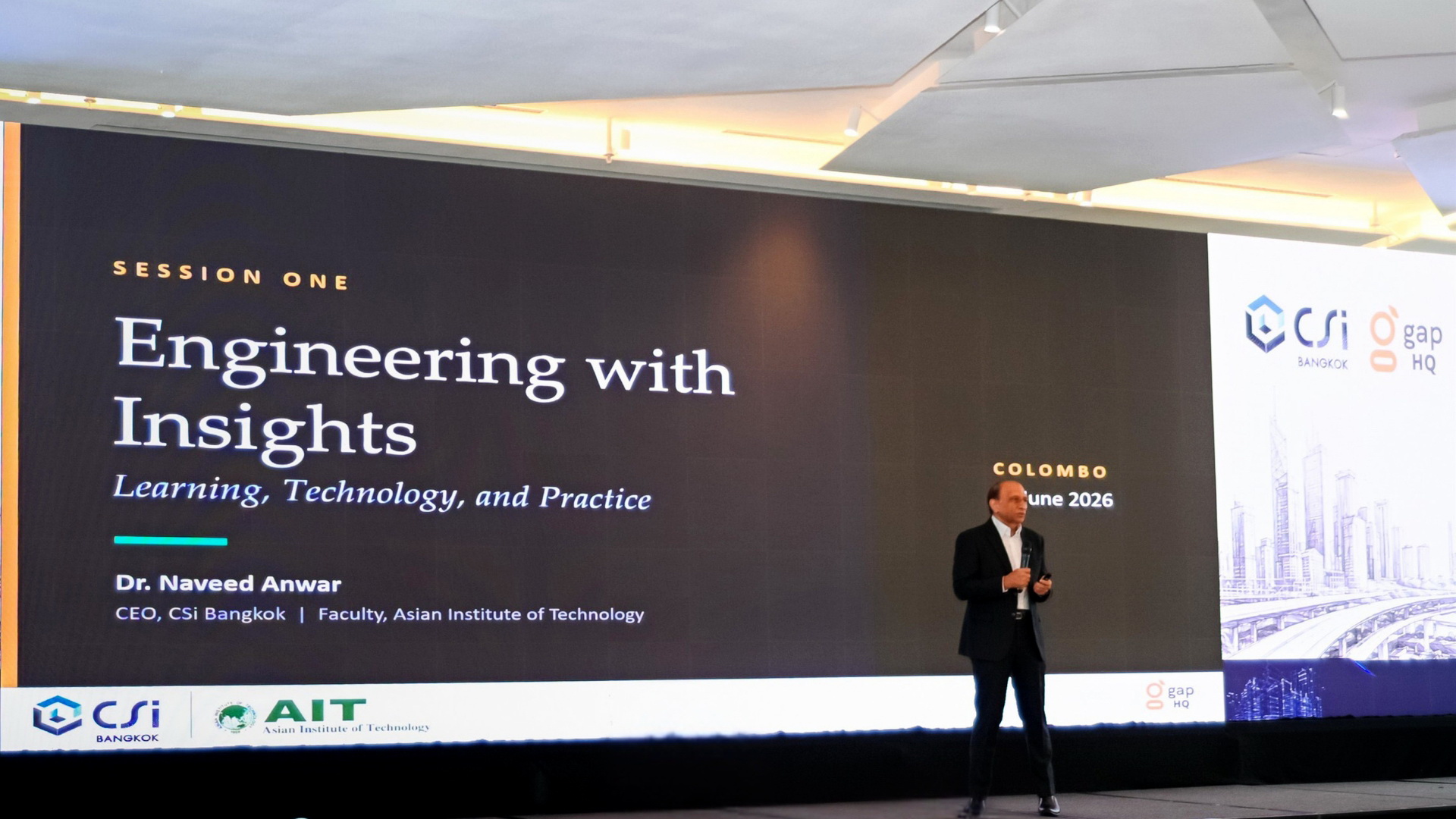
The event featured two prominent speakers – Dr. Naveed Anwar, CEO of CSI Bangkok and Dr. Qasim Hamakhurshid, a PhD Researcher, Universiti Teknologi Malaysia (UTM) and a specialist in AI for Regional Development.
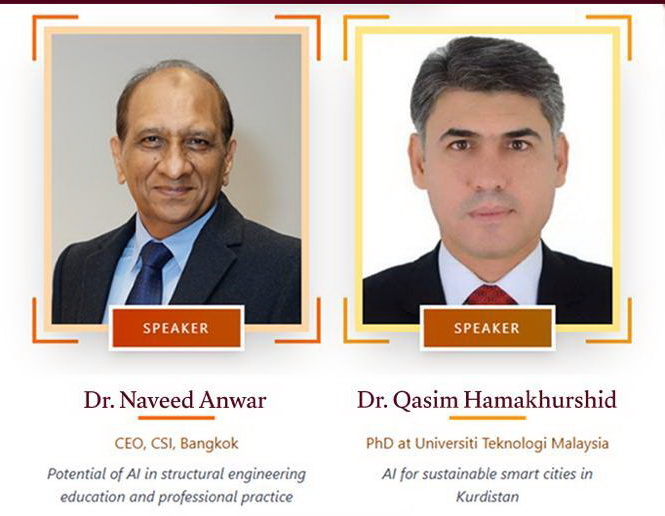
Dr. Naveed Anwar
Following the opening remarks and workshop introduction, Dr. Naveed Anwar was invited to deliver his talk on The Potential of AI in Structural Engineering Education and Professional Practice, via an online platform.
Dr. Anwar’s presentation balanced between personal experiences, anecdotes, and evidence-based insights. He explained how it was becoming increasingly necessary to adopt AI tools and the need to transition from conventional engineering workflows toward AI-assisted approaches.
The video recording of Dr. Naveed Anwar’s presentation is viewable on YouTube.
He discussed the application of artificial intelligence in areas such as digital twins, predictive maintenance, and the evolving skill sets required for engineers as the profession becomes increasingly data centric.
Key Takeaways
- Two main themes: AI is reshaping both structural engineering practice and engineering education.
- Why this AI wave matters: GPU scale computing, generative AI, and strong institutional investment are driving faster adoption than earlier AI cycles.
- Human judgment remains critical: Engineers’ design sense and responsibility for public safety cannot be automated, so AI must stay under human control.
- Practical workflow impact: AI can shorten early-stage iteration through preliminary sizing, insight driven checking, and faster coordination across modelling, analysis, and documentation.
- AI as assistance, not authority: Outputs must be verified, traceable, and reviewed because AI can be helpful but also confidently wrong.
- Collaborative intelligence: The most effective future combines engineers defining real constraints, technologists building reliable workflows, and AI supporting communication and automation between them.
- Hybrid AI is the practical route: Real engineering applications work best when LLMs handle interaction and intent, but engineering tools and ML models perform structured calculations through tool or function calling.
- Real-world use cases: Conversational beam and bridge design assistants demonstrate how preliminary design and costing can be reached faster through guided dialogue and iterative refinement.
- Education shift: AI works best as a learning companion that supports questioning and understanding, but students must still cross-check and build intuition through practice.
Dr. Qasim Hamakhurshid
Next, Dr. Qasim Hamakhurshid presented research on the use of AI to support sustainable infrastructure development. This included intelligent infrastructure management systems for smart grids and water networks. His talk also addressed the role of data-driven policies in improving urban resilience and resource efficiency within the Kurdistan region.
Academic and Professional Exchange
The workshop was attended by a strong group of faculty members, researchers, practicing engineers, and postgraduate students from various academic and professional institutions. The diverse audience supported meaningful discussion on both theoretical and applied aspects of artificial intelligence in engineering.
Following the event, the organizing committee offered their appreciation for Dr. Naveed Anwar’s contribution and participation. They noted that his “expert lecture, rich with practical knowledge and academic experience provided the participants with a clear understanding of current challenges and advancements in the field.”
Ongoing Commitment to Knowledge Sharing
This workshop is part of CSI Bangkok’s continued dedication in supporting knowledge-sharing initiatives and collaboration with academic and professional communities in the advancement of structural engineering.
For more information or updates, visit our website:
Knowledge Hub | News | Events
or email us at [email protected]